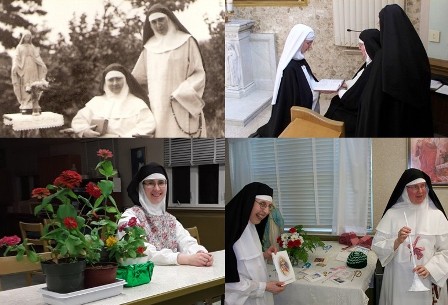
Vocation
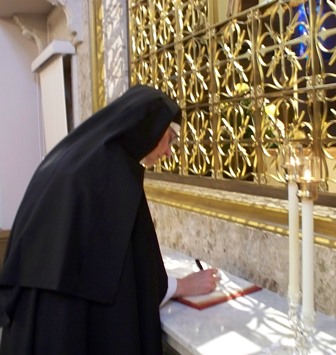
Solemn profession marks both an ending and a beginning. It is the end of the years of one’s novitiate formation and the beginning of a life of on-going formation as a fully professed member of the community. Day by day, we seek to be more closely conformed to Jesus Christ, and Him crucified. Which means that everyday we begin anew!
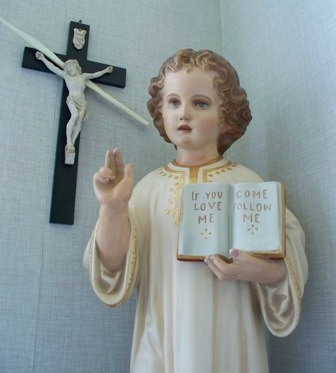
So through monastic life, you enter the “school of love.” God gives “the call;” the community nourishes that initial desire to belong to God; but the candidate herself, in her willingness to respond to the grace of her call, bears the ultimate responsibility for her formation.
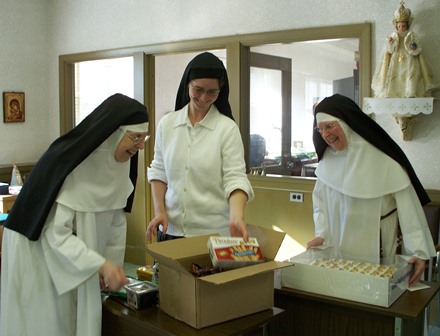
You learn by living the life itself, through holding all things in common with your sisters. You learn through sisterly friendships and sharings.
You learn through pondering the Word of God and study.
You learn through “trials and tribulations,” through falling down and getting up again. You learn through extending forgiveness to others, and through humbling asking pardon for your own faults.
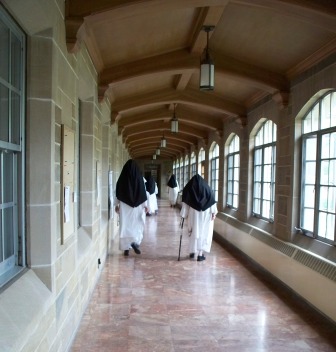
You learn through fidelity to the common life: being at choir when you’re supposed to be at choir; being at work when you are supposed to be at work; going to your cell when it’s time for Profound Silence; joining in the laughter when it’s time for recreation.
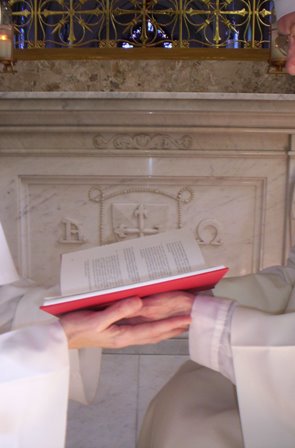
BEARING A HIDDEN FRUITFULNESS . . .
PROFESSION IS A GREAT GIFT
Don’t let a religious vocation pass you by! Covid-19 has made things difficult for everyone, but if you feel drawn to give your life to God as a contemplative nun, please contact us, and we will see what our possibilities are for discussing the matter with you.